EN
EN  English
 русский
 عربى
عربى 中文简体
中文简体
Plastic pallets are widely used in warehouses, shipping centers, supermarkets, and manufacturing facilities. They support the movement of goods through storage and transportation systems across different industries. Behind these products, the Plastic Pallet Mould plays a central role in shaping pallet structure, load distribution, and production efficiency.
Rather than producing pallets one by one through manual assembly, the Plastic Pallet Mould allows manufacturers to create repeatable pallet designs through injection molding systems.
Mold Structure and Engineering Design
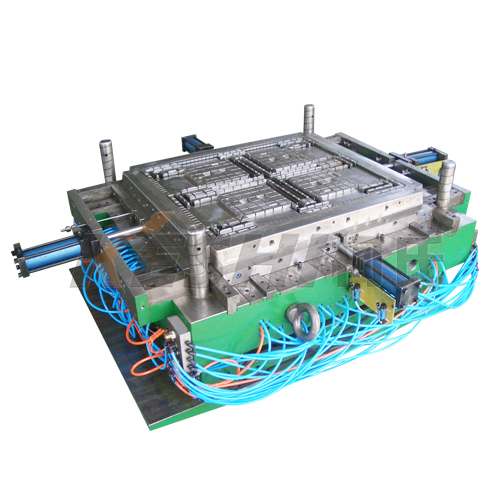
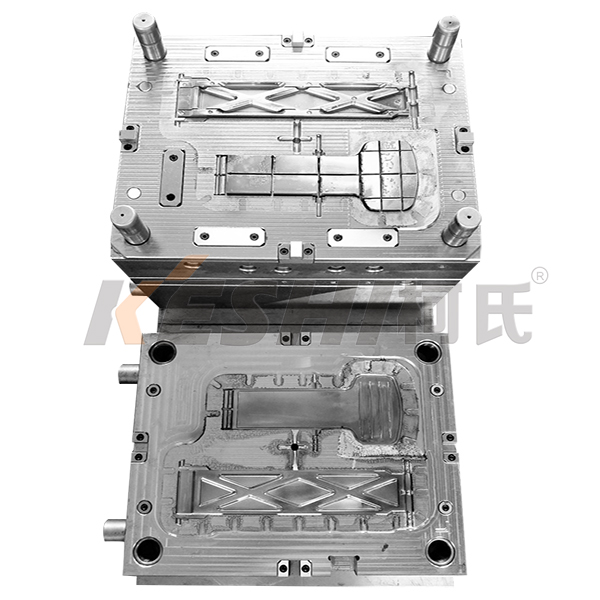
A Plastic Pallet Mould is usually built from hardened steel designed to withstand high injection pressure and repeated production cycles. The mold cavity determines the pallet's dimensions, support ribs, surface texture, and entry points for forklifts.
Inside a Plastic Pallet Mould, structural reinforcement areas are carefully designed to support load-bearing performance after molding. Rib patterns and wall thickness are adjusted depending on the pallet's intended application.
Large pallet molds may include multiple internal channels for cooling and material distribution, helping maintain shape consistency during production.
Injection Molding and Material Flow
The production process begins by melting plastic raw materials such as HDPE or polypropylene. The molten material is injected into the mold cavity under controlled temperature and pressure conditions.
A Plastic Pallet Mould must support even material flow across large surface areas. If flow becomes unbalanced, defects such as warping, sink marks, or incomplete filling may occur.
Gate placement inside the mold affects how the plastic spreads during injection. Engineers often adjust flow paths based on pallet size and structural complexity.
Cooling Systems and Cycle Management
Cooling plays a major role in pallet manufacturing because of the product's large dimensions. A Plastic Pallet Mould contains cooling channels that circulate water to reduce mold temperature after injection.
Uniform cooling helps stabilize the pallet shape before ejection. Uneven cooling may cause distortion or dimensional changes during production cycles.
Cycle timing is also influenced by cooling efficiency. Faster and balanced cooling supports steady production output while maintaining product consistency.
Ejection and Surface Finishing
After cooling, the pallet must be released from the mold without damaging its structure. A Plastic Pallet Mould uses ejector systems to push the molded pallet from the cavity surface.
Because pallets have large flat sections and reinforced ribs, ejection pressure must be distributed evenly. Sudden release pressure may affect structural alignment.
Surface texture is also considered during mold design. Some pallets include anti-slip patterns or identification markings formed directly inside the mold cavity.
Applications in Logistics and Warehousing
Plastic pallets are used across food distribution, manufacturing, export shipping, and warehouse storage systems. Products created with a Plastic Pallet Mould are designed for repeated handling by forklifts and automated logistics equipment.
Compared with wooden pallets, plastic versions are often selected in environments where moisture resistance and easier cleaning are part of operational requirements.
Different pallet styles are produced depending on load type, stacking method, and transportation conditions.
Maintenance and Mold Longevity
Regular maintenance helps maintain production stability over long operating periods. A Plastic Pallet Mould is cleaned after production runs to remove residual plastic and prevent buildup inside gates or cooling channels.
Lubrication and alignment inspection are also carried out on moving components such as ejector systems. Mold surfaces are checked for wear that could affect pallet dimensions or texture quality.
Industrial Precision Behind Everyday Logistics
Plastic pallets may appear simple in daily warehouse operations, but their production depends on structured engineering and controlled molding systems. The Plastic Pallet Mould supports this process through material flow management, cooling design, and precise cavity structure.
From logistics centers to industrial storage systems, products shaped by a Plastic Pallet Mould continue to support modern transportation and material handling workflows.