EN
 English
 русский
 عربى
 中文简体

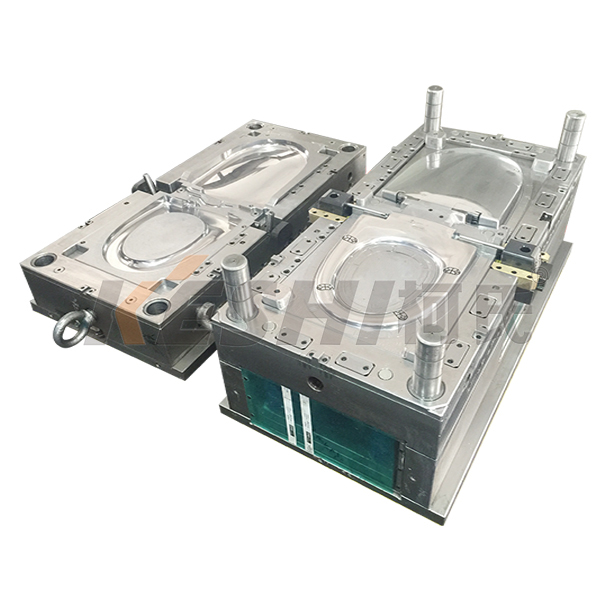
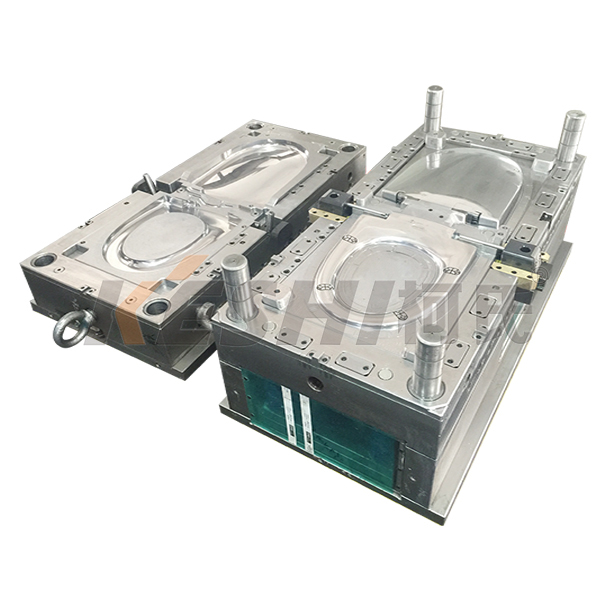
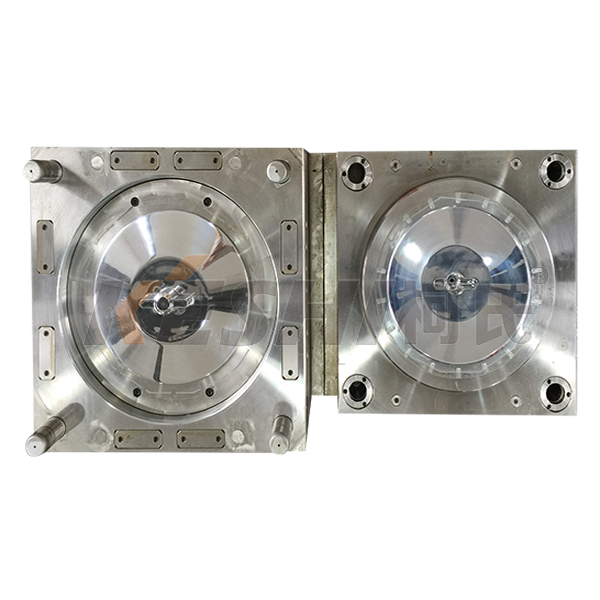
A daily use dustbin sits in kitchens, offices, streets, and parks. It gets kicked, shoved, and filled with whatever people throw at it. It has to be cheap enough to produce by the thousands and tough enough to survive years of abuse. The Daily Use Dustbin Mould that makes it is a large-format injection tool that fills, cools, and ejects a complete bin in under a minute, and every feature of the bin traces back to a decision made in the steel.
One or Three Degrees of Taper
A dustbin tapers from the wider rim to the narrower base, usually one to three degrees. The taper lets the bin slide off the core when the mould opens. Too little and the bin sticks. Too much and it wobbles on its base.
The mould with the proper taper releases cleanly and keeps the bin steady. The base gets a slight recess so the finished bin rests on its outer edge, not on a single high spot. A bin that rocks on the floor is a bin that gets returned.
Stiffness Comes From the Ribs
The rim is the strongest part. It carries the lid, absorbs the drop, and gives the user a grip. The mould designs the rim with a thick cross-section that fills without sink marks. A rim that sinks shows on the outside and weakens the grip.
The vertical ribs stiffen the walls without adding much material. Too few and the bin flexes when lifted full. Too many and the mould gets complex and the cycle slows. The mould that balances the rib layout for stiffness without trapping air produces a bin that holds its shape and still runs at the target cycle time.
The Core Is Hard to Cool
The core extends deep into the mould and forms the inside of the bin. It holds heat, and the cavity side holds heat too. The cooling channels run through both, and the deep core needs a bubbler or a spiral circuit to pull heat from the center.
The mould with conformal cooling on the core runs a faster cycle and produces a bin with lower internal stress. A core that runs hot forces a longer cooling time, and the bin comes out warped at the rim.
Gate and Ejection
The gate feeds the melt into the base or the rim. A center gate in the base fills the body evenly, and a hot runner with a valve gate keeps the vestige small. An edge gate fills from the rim and suits the shorter bin.
The ejection pushes the bin off the core. The ejector pins land on the base and the rim, on the outside edge where the marks are not visible when the bin stands. A pin on the inside face leaves a mark the user sees every time they lift the lid.
What the factory has to deliver:
- Proper taper for the clean release and the stable standing
- Reinforced rim that fills without sink marks
- Vertical ribs for wall stiffness
- Hot runner with the center gate
- Cooling channels in the core and the cavity
- Ejection that does not mark the visible surface
The Bin on the Corner
The kitchen bin, the office bin, the street litter bin, the medical waste bin. The sizes run from 5 to 50 liters and beyond, and the material is usually polypropylene or HDPE. The mould dimensions account for the material shrinkage, and the shrinkage differs between the two resins.
Why the Bin Sticks or Warps
The bin sticks on the core because the taper was too small or the surface finish too rough. The rim sinks because the gate froze before packing out the thick section. The bin warps because the cooling was uneven. The handle ear cracks because the side core dragged on ejection. Each one is a mould decision made before the first bin comes out.