EN
EN  English
 русский
 عربى
عربى 中文简体
中文简体
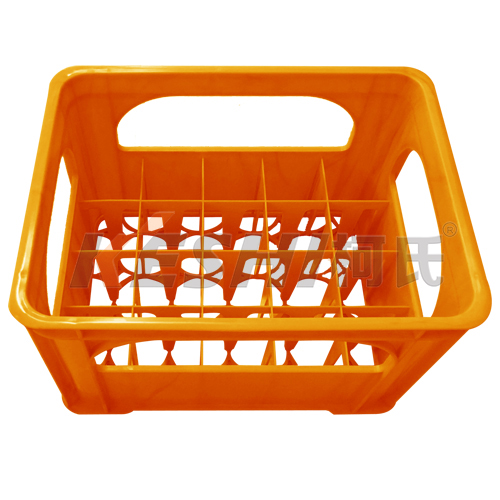
A plastic crate carries bottles, bread trays, and produce from farm to store. It stacks, nests, and survives forklift impacts. A single crate mould produces one crate per cycle in a press that opens and closes thousands of times. The mould fills the cavity, cools the part, and ejects it without warping while it is still hot. A single crate mould manufacturer builds tooling for dairies, beverage distributors, and agricultural packers. The crate is a low-cost product. The mould that makes it runs for millions of cycles.
A Cavity the Size of a Crate, Filled in Seconds
Molten HDPE or polypropylene enters a cavity with tall side walls, ribbed corners, and a grid-pattern base. The melt has to reach every corner before it freezes. Multiple hot-drop gates positioned above the thickest sections deliver the material where it is needed. Hot runners keep the plastic molten right up to the cavity entry, cutting out the waste of cold runners.
The injection pressure tries to push the mould halves apart. A single crate mould with a thick backing plate and enough support pillars holds the parting line closed. Flash on a crate means manual trimming, and manual trimming kills the economics of high-volume production.
Getting the Heat Out Before the Next Shot
Cycle time drives the business. The faster the part cools, the sooner the next crate comes out. Cooling channels drilled through the core and cavity target the thickest areas: the base corners, the handle cutouts, and the stacking lugs. Conformal cooling goes further, routing channels along the contour of the part to pull heat from spots straight drills miss.
Uneven cooling warps the crate. One side solidifies while the other is still soft. The part twists. A warped crate does not stack on a pallet or run through a filling line. A single crate mould with balanced cooling on both sides produces flat parts that fit the standard footprint.
Here is what the mould needs to run production:
- Hot runner system with multiple drops at thick sections
- Cavity dimensions compensated for material shrinkage
- Cooling channels targeting the thickest areas; conformal where possible
- Ejector pins on solid sections only, not on thin grid areas
- Draft angles that let the part release without hanging up
Pushing the Crate Off the Core
The part shrinks onto the core as it cools. Ejection pushes it off. Ejector pins have to land on the solid base areas and the rib intersections. Pins on thin grid sections punch through the hot plastic. The ejection stroke must clear the deepest part of the crate from the core.
Draft angles on the walls let the crate release. A textured surface needs more draft than a smooth one because the texture grips the core. A single crate mould with draft calculated for the surface finish and material shrinkage releases without the operator prying parts out by hand.
Five Million Cycles Later
Dairy crates run through filling lines, cold storage, and delivery trucks. Agricultural crates carry produce through packing sheds and markets. Industrial crates sit in warehouses and ride conveyors. A single crate mould has to keep producing the same part whether it is shot number one thousand or one million.
Ejector pins eventually bend. Cooling channels scale up from hard water. The hot runner valve gates wear. A single crate mould with accessible maintenance points, replaceable wear components, and a preventive schedule hits the five-million mark without a major rebuild. Choose a manufacturer that fills the cavity completely, cools it fast, and builds for the long run. The crates will ship. That is what pays for the mould.