EN
EN  English
 русский
 عربى
عربى 中文简体
中文简体
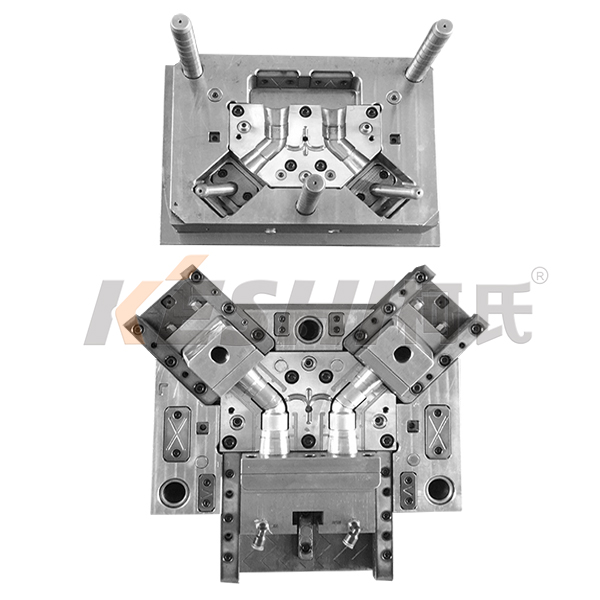
Behind every functioning plumbing system are countless connections. Elbows, tees, couplings, and adapters join pipes together to carry water, gas, and other fluids. The pipe fitting mould creates these essential components. Unlike simple plastic parts, pipe fittings must seal against pressure, resist corrosion, and maintain dimensional accuracy over years of service. The pipe fitting mould determines whether a fitting will leak or hold tight.
A pipe fitting mould is designed to produce parts with threaded ends, socket connections, or smooth fusion surfaces. The mould cavity includes the fitting's internal and external features. Some pipe fitting mould designs produce multiple fittings in each cycle, such as four elbows or two tees. The mould must account for the specific shrinkage behavior of the pipe-grade plastic being used.
Types of Fittings and Mould Configurations
Different piping systems require different fitting styles. A pipe fitting mould for solvent weld fittings creates smooth sockets that accept pipe wetted with cement. A pipe fitting mould for threaded fittings includes core pins that form internal threads. A mould for fusion fittings produces heating elements embedded in the plastic. Each configuration adds complexity to the mould design.
Common fittings from a pipe fitting mould include:
- 45-degree and 90-degree elbows for changing pipe direction
- Tee fittings for branch connections
- Reducers for joining different pipe diameters
- Couplings for connecting straight pipe lengths
- End caps for sealing pipe openings
Each fitting type requires specific mould features. Elbows need core pulls that retract before ejection. Threaded fittings require unscrewing mechanisms or collapsible cores. A pipe fitting mould for large-diameter fittings may weigh several tons and require heavy-duty injection molding machines.
Design Considerations for Pipe Fitting Moulds
Designing a pipe fitting mould starts with the fitting's pressure rating. Higher pressure ratings require thicker walls and stronger materials. The mould cavity must be sized to produce fittings that meet dimensional standards such as ASTM D2466 for PVC fittings. Shrinkage calculations are particularly important for socket and spigot dimensions. A socket that is too loose will leak. A socket that is too tight will crack when the pipe is inserted.
Cooling channel placement affects cycle time and part quality. A pipe fitting mould with efficient cooling produces parts faster and with less warpage. Fittings with uneven wall thickness, such as elbows, tend to warp if cooling is not balanced. Mould designers place cooling channels closer to thick sections and further from thin sections to achieve uniform cooling.
Venting is another critical consideration for a pipe fitting mould. Trapped air in the cavity causes burn marks or incomplete filling. Venting channels, typically 0.02 to 0.05 millimeters deep, allow air to escape as plastic fills the cavity. Threaded areas are particularly challenging because air can become trapped in the thread roots.
Materials and Manufacturing
The steel chosen for a pipe fitting mould depends on production volume and the plastic being molded. PVC and CPVC fittings are common in plumbing. These materials release chlorine gas during processing, which can corrode mold steel. A pipe fitting mould for PVC typically uses stainless steel or hard chrome-plated tool steel to resist corrosion.
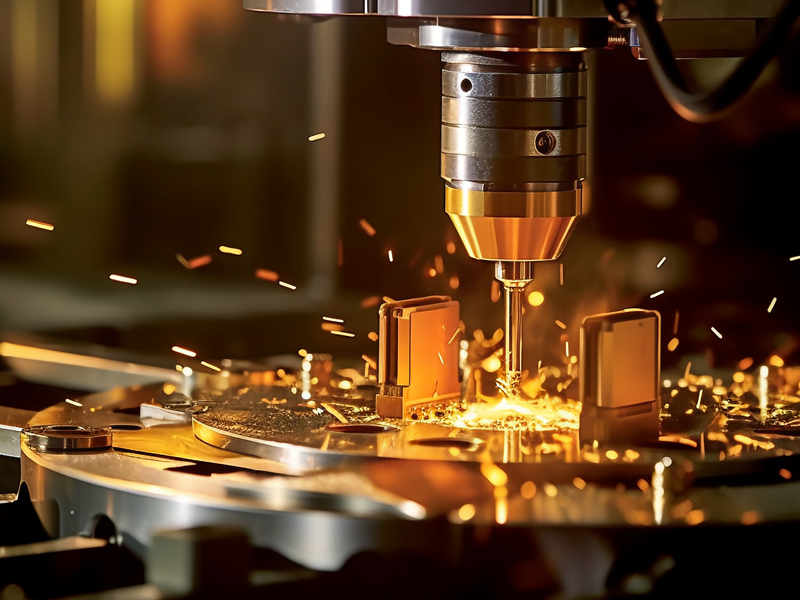
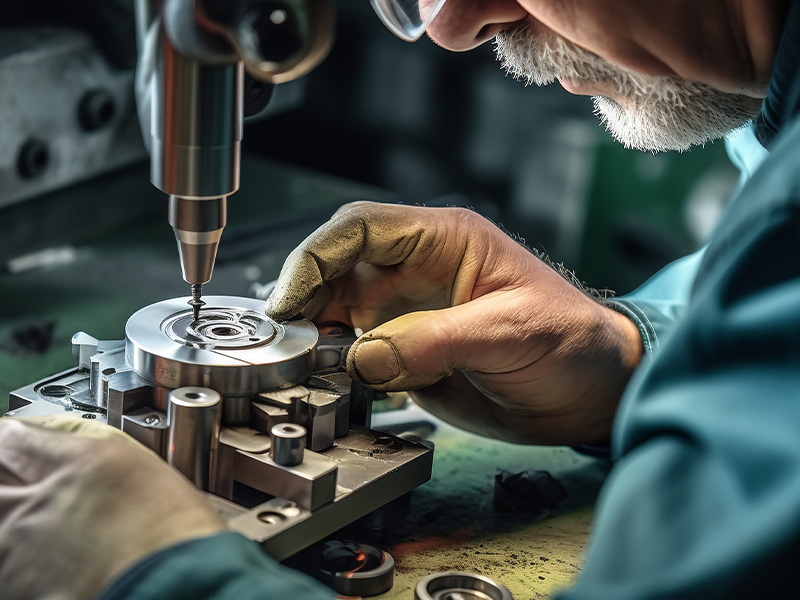
Mold manufacturing involves several steps. The cavity and core are machined from steel blocks using CNC mills. Threaded cores may be produced on CNC lathes. Electrical discharge machining creates sharp internal corners that milling cannot reach. After machining, critical surfaces are polished to achieve the required surface finish. A smooth finish helps the fitting release from the pipe fitting mould and produces a clean appearance.
Quality checks during mould manufacturing include:
- Dimensional inspection of cavity and core using coordinate measuring machines
- Surface finish verification with profilometers
- Fit testing of moving components such as slides and core pulls
- Water flow testing of cooling channels
Production and Maintenance
Once the pipe fitting mould is installed in an injection molding machine, production begins. The machine heats the plastic to a specific temperature range, injects it into the mould, and holds pressure as the part cools. Cycle times for a pipe fitting mould range from 20 seconds for small fittings to several minutes for large-diameter parts.
Regular maintenance extends the life of a pipe fitting mould. After each production run, the mould is cleaned of plastic residue. Cooling channels are flushed to remove scale. Ejector pins and slides are lubricated. Threaded cores are inspected for wear. A well-maintained pipe fitting mould can produce millions of fittings before requiring major repairs.
Supporting Reliable Plumbing Systems
From residential bathrooms to industrial process lines, pipe fittings connect the pipes that carry essential fluids. The pipe fitting mould shapes each fitting with the precision needed for leak-free connections. While the mould itself never appears in the finished system, every reliable joint depends on its accuracy and consistency.