EN
 English
 русский
 عربى
 中文简体

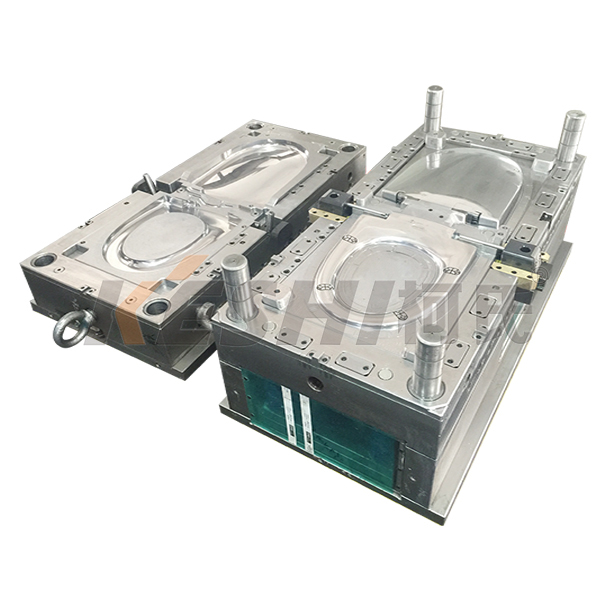
A cooler box is a plastic shell with an insulated cavity, a lid that seals, and handles that take the load when it is full. The mould that makes it has to form the thick-walled body, the lid, and the hardware mounts, and it has to do it without the sink marks, the warping, or the weak spots that let the cold escape. A cooler box mould is built around the insulation and the seal, not around the shell alone.
The Thick Wall Is the Whole Point
The cooler box body is thick-walled, often several millimeters, because the wall carries the insulation and the structural stiffness. The thick sections hold heat during the moulding, and the cooling channels have to pull it out before the part warps.
A cooler box mould that cools the thick walls evenly produces the body that keeps its shape and its insulation value. Uneven cooling leaves the internal stress that warps the box after ejection, and the lid no longer seals.
The Lid and the Seal
The lid is a separate mould, and the fit between the lid and the body decides whether the cooler works. The seal, usually a gasket in a groove, compresses against the body rim. The mould has to hold the rim flat and the groove consistent.
A cooler box mould that machines the rim and the groove to the matched tolerance produces the lid that seals. A warped rim leaves a gap that the gasket cannot close, and the cold escapes through it.
The Handles and the Hinge
The handles take the full weight of the loaded cooler. The hinge takes the repeated opening and closing. Both are moulded into the body and the lid, and both are the stress points.
A cooler box mould that reinforces the handle roots and the hinge area produces the box that survives being carried full. A thin handle root cracks on the first heavy lift.
The Insulation and the Two-Shot Option
Some cooler boxes use the two-shot moulding, with the rigid shell and the foam or the soft insulation in one cycle. The two-shot cooler box mould needs the rotating or the core-back design, and the two materials have to bond.
The mould that controls the interface between the shell and the insulation produces the box with the consistent wall and no gaps.
What the factory has to deliver:
- Cooling channels sized for the thick walls
- Lid and body rims machined to the matched tolerance
- Gasket groove consistent around the full perimeter
- Reinforced handle roots and hinge area
- Two-shot design where the insulation is moulded in
- Material-specific shrinkage allowance
Where the Cooler Goes
The camping cooler, the fishing box, the medical transport box, the delivery cooler. Each one needs the box that holds the temperature, and the mould is what decides whether it does.
When the Cooler Fails
The box warps and the lid does not seal. The handle cracks on the first heavy lift. The gasket groove is uneven and the cold leaks out. The thick wall sinks on the outside face. Each one is a mould decision made before the first box comes out.