EN
EN  English
 русский
 عربى
عربى 中文简体
中文简体
From Granules to Garden Chairs
Every plastic chair, table, and storage unit begins as tiny granules inside massive molding machines. A plastic furniture mold transforms raw material into finished products found in homes, gardens, and commercial spaces worldwide. These tools rank among the largest in the injection molding industry, with some exceeding ten tons and costing hundreds of thousands of dollars. The scale and complexity explain why furniture manufacturing concentrates among specialized producers with significant capital investment.
Size Challenges in Mold Making
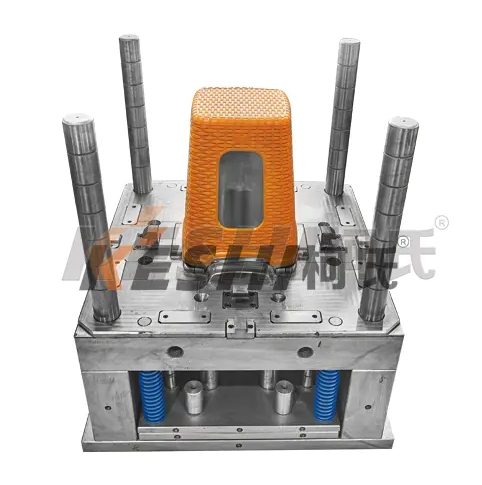
Creating molds for furniture pushes manufacturing capabilities to limits. A single plastic furniture mold for a dining chair might measure over a meter square. The steel weight alone requires heavy lifting equipment during production and installation. Machining such large components demands massive CNC equipment with extended travel ranges. Thermal expansion becomes significant at this scale, requiring compensation in design and operation.
Structural Integrity Requirements
Furniture must support human weight safely through years of use. A well-designed plastic furniture mold creates reinforcement ribs strategically placed where loads concentrate. Thicker sections provide strength at stress points while thinner areas save material and reduce cycle times. Living hinge designs for folding furniture demand precise geometry allowing repeated flexing without failure. Each structural decision appears first in mold design before any actual furniture exists.
Surface Finish Expectations
Consumers judge furniture quality largely by appearance. Glossy finishes require mirror-polished mold surfaces transmitting perfect smoothness to parts. Textured surfaces hide minor scratches from daily use while providing visual interest. Simulated wood grain requires intricate etching replicating natural patterns convincingly. A quality plastic furniture mold delivers surface appearance matching consumer expectations for each price point and style category.
Cooling System Complexity
Large molds generate enormous heat requiring efficient removal. Cooling channels must follow cavity contours maintaining uniform temperatures across entire surfaces. Uneven cooling causes warpage, making chairs wobble and tables rock. Conformal cooling techniques using channels following part shapes improve temperature control dramatically. A thermally optimized plastic furniture mold reduces cycle times while improving dimensional accuracy through consistent cooling.
Ejection System Engineering
Removing large parts without damage challenges mold designers. Multiple ejector pins distribute force across surfaces, positioned where marks remain hidden. Air poppets break vacuum seals holding parts in cavities. Hydraulic ejection systems provide controlled force for delicate components. Some designs incorporate robotic part removal integrated with mold operation. A thoughtful plastic furniture mold includes ejection mechanisms matching part geometry perfectly.
Material Flow Dynamics
Molten plastic must travel long distances filling large cavities completely. Flow analysis software predicts how material advances, identifying areas where weld lines might weaken structure. Gate placement determines flow patterns affecting strength and appearance. Multiple gates balance filling across complex geometries. A properly engineered plastic furniture mold addresses flow dynamics ensuring complete fill without defects.
Gas-Assist Molding Applications
Large furniture parts benefit from gas-assist technology creating hollow sections. Gas injected after plastic fills cores channels through predetermined paths, reducing material usage while maintaining strength. Thick sections become hollow tubes with solid outer skins. A advanced plastic furniture mold incorporates gas-assist features for specific applications where weight reduction matters.
Quick Mold Change Systems
Furniture manufacturers produce multiple styles on same machines to maximize utilization. Standardized mounting interfaces allow rapid mold changes between production runs. Hydraulic and electrical connections incorporate quick-disconnect features. Mold preheating reduces startup time after installation. A production-focused plastic furniture mold facility organizes tooling for efficient changeovers across diverse product families.
Prototype Testing Before Production
New furniture designs undergo extensive evaluation before production tooling commits. Sample parts from prototype molds verify dimensions and appearance. Structural testing confirms load capacity meets safety standards. Assembly trials ensure components fit together properly. A thorough plastic furniture mold development process includes these verification steps, reducing risk of expensive corrections after production begins.